





Custom plastic injection molding is a cornerstone of modern manufacturing, enabling businesses to produce complex, high-performance components at scale with exceptional accuracy and repeatability. From aerospace assemblies to medical devices and electronic housings, injection molding delivers both efficiency and consistency—two critical factors in competitive production environments.
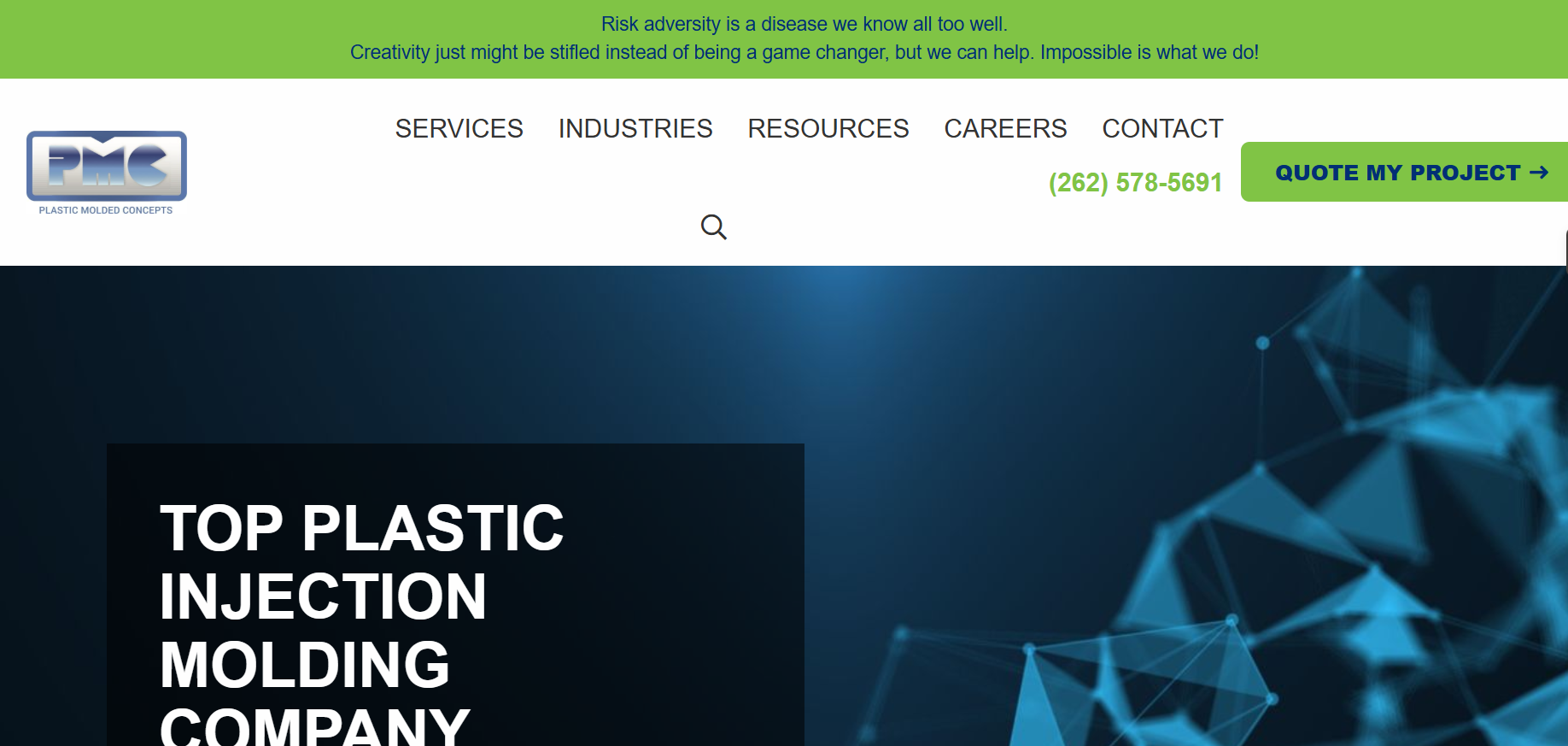
A strong example of excellence in this domain is Plastic Molded Concepts (PMC), an ISO 9001:2015 certified manufacturer with over 50 years of experience. PMC specializes in high-precision injection molding, overmolding, and insert molding for demanding industries such as aerospace, medical, and electronics. Beyond production, they provide end-to-end support including mold design, material selection, prototype development, forensic failure analysis, and secondary operations—ensuring clients receive durable, accurate, and high-quality plastic components tailored to exact specifications.
What Is Custom Plastic Injection Molding?
Custom plastic injection molding is a manufacturing process where molten plastic is injected into a precisely engineered mold cavity to produce parts with tight tolerances and complex geometries.
Key Characteristics:
-
High precision and repeatability
-
Scalable production (low to high volume)
-
Material versatility (engineering-grade polymers)
-
Complex part geometries with minimal waste
This process is particularly valuable when standard off-the-shelf components cannot meet performance, durability, or design requirements.
Core Capabilities in Custom Injection Molding
1. Mold Design & Engineering
-
CAD-based mold design tailored to part geometry
-
Optimization for cycle time, cooling, and shrinkage
-
Design for Manufacturability (DFM) analysis
2. Material Selection
Selecting the right polymer directly impacts performance, cost, and longevity.
Common materials include:
-
ABS (impact resistance)
-
Polycarbonate (high strength and transparency)
-
Nylon (wear resistance)
-
TPE (Thermoplastic Elastomer) – flexible and rubber-like materials
→ Understanding the tpe melting point is essential for proper processing and product performance -
Acetal (POM) – high stiffness, low friction
→ Learn more about acetal copolymer for precision parts requiring dimensional stability
3. Prototype Development
-
Rapid prototyping for validation
-
Iterative design testing before full-scale production
-
Reduces risk and shortens time-to-market
4. Advanced Molding Techniques
a. Overmolding
-
Combines multiple materials into a single component
-
Improves ergonomics, sealing, and durability
b. Insert Molding
-
Embeds metal or other components within plastic
-
Enhances structural integrity and reduces assembly steps
5. Secondary Operations
Post-molding processes that enhance functionality and finish:
-
CNC machining
-
Ultrasonic welding
-
Assembly and packaging
-
Surface finishing and labeling
6. Forensic Failure Analysis
A critical but often overlooked capability:
-
Identifies root causes of part failure
-
Improves product design and reliability
-
Reduces long-term manufacturing defects
Benefits of Custom Injection Molding
Operational Advantages
-
Cost efficiency at scale
-
Reduced material waste
-
High production speed
-
Automation compatibility
Product Advantages
-
Consistent quality and tight tolerances
-
Enhanced durability and performance
-
Complex geometries without secondary assembly
-
Material-specific customization
Industries That Rely on Injection Molding
Aerospace
-
Lightweight, high-strength components
-
Strict compliance with safety standards
Medical
-
Biocompatible materials
-
Precision for surgical and diagnostic devices
Electronics
-
Heat-resistant housings
-
Insulation and micro-component accuracy
Automotive
-
Interior and under-the-hood components
-
High-volume production with durability
Key Considerations When Choosing a Molding Partner
When selecting a custom injection molding provider, evaluate:
-
Certifications (e.g., ISO 9001:2015)
-
Experience in your target industry
-
Engineering and design support
-
Material expertise
-
Quality assurance processes
-
Full-service capabilities (from prototype to production)
A partner like PMC stands out by offering a vertically integrated approach—covering everything from concept development to final production and post-processing.
Strategic Value for Businesses
From an operational and strategic standpoint, custom injection molding enables:
-
Faster product development cycles
-
Reduced dependency on multiple vendors
-
Improved product differentiation
-
Better control over quality and supply chain
For digital-first companies or platforms like PubWhizz operating in B2B ecosystems, aligning with high-quality manufacturing partners enhances credibility, improves client retention, and supports scalable growth strategies.
Conclusion
Custom plastic injection molding is not just a manufacturing method—it is a strategic capability that drives innovation, efficiency, and product excellence. Companies that leverage experienced partners with deep engineering expertise, such as PMC, gain a competitive advantage through precision, reliability, and scalability.
By combining advanced molding techniques, optimized material selection, and comprehensive support services, businesses can confidently bring high-performance plastic components to market—faster and more efficiently than ever before.








Leave a Reply