





How to Choose Metal Detecting Equipment for Different Hunting Locations
Choosing the right metal detecting equipment starts with the place you plan to search, because a beach, public park and old field each create different recovery challenges.
Many beginners buy accessories one item at a time without considering how the complete setup will work. The result is often a heavy bag filled with tools that are rarely used. A more practical approach is to build the kit around three tasks: locating the target precisely, recovering it safely and carrying everything comfortably.
Equipment for parks and grassy areas
Searching maintained grass requires accuracy. Large holes and damaged turf can quickly create problems for detectorists, so compact recovery tools are usually the better choice.

A park setup may include a handheld pinpointer, narrow digging tool, finds pouch and small cloth for holding loose soil. The pinpointer helps locate the object inside the plug, while the cloth keeps removed soil together until it can be returned.
Gloves are also useful because targets may include sharp wire, rusted metal or broken objects. These simple metal detector accessories help make each recovery cleaner and more controlled.
Gear for fields and woodland
Old fields and wooded areas often contain deeper targets, roots and compacted soil. In these locations, a hand digger may not provide enough leverage.

A strong shovel can make deeper recoveries easier, while a serrated digging blade helps when small roots block access to the target. A secure pouch is important for carrying coins, relics and unwanted metal separately.
When selecting metal detecting gear for long walks, weight matters. Every item may feel light at the beginning, but unnecessary tools become noticeable after several hours. Equipment should be durable without making the detectorist carry more than the location requires.
Supplies for beach detecting
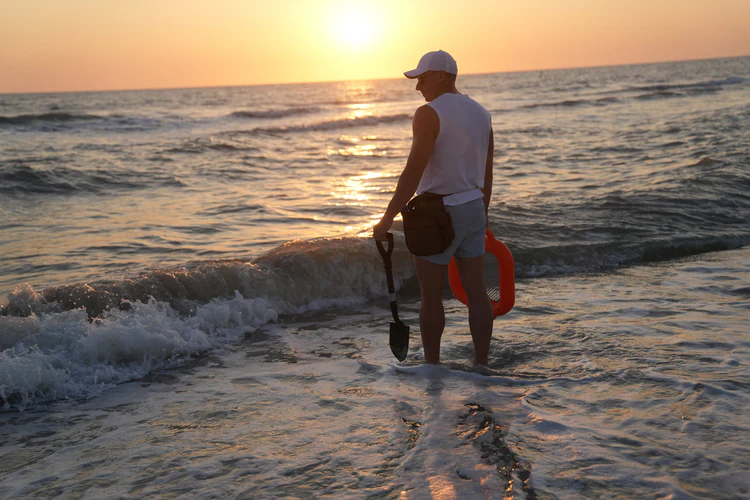
Beach hunting needs a different recovery system. Loose sand collapses quickly, and targets may move as waves pass over them. A perforated sand scoop is usually more useful than a standard digging shovel.
Dry sand can be searched with a lightweight scoop, while wet sand and shallow water may require stronger construction and a longer handle. A finds bag that drains water can help prevent wet sand from collecting around recovered items.

Other practical metal detecting supplies for the beach include waterproof footwear, gloves, a pinpointer suitable for wet conditions and fresh water for rinsing equipment after exposure to salt and sand.
Accessories that improve comfort
Not every useful accessory is designed for digging. Detector shafts, arm cuffs and grips can change how the detector feels during a long session.
A comfortable shaft length helps maintain a natural posture. A secure arm cuff improves control over the detector, while a suitable grip can reduce hand fatigue. These details may seem minor, but repeated movement can make poor ergonomics noticeable over time.
Storage also matters. Belt pouches keep frequently used tools close, while a backpack is useful for spare clothing, batteries, water and equipment that is not needed for every signal.
Build a kit with a clear purpose
Before adding new equipment, consider whether it solves a real problem. A useful item should improve target recovery, protect a find, increase comfort or make the search area easier to restore.
A compact kit for parks may look completely different from a beach or field setup. There is no single collection of metal detecting gear that works perfectly everywhere.
The most effective approach is to match each tool to the environment. When every item has a clear purpose, the detectorist can move more comfortably, recover targets more efficiently and spend less time managing unnecessary equipment.









Leave a Reply