





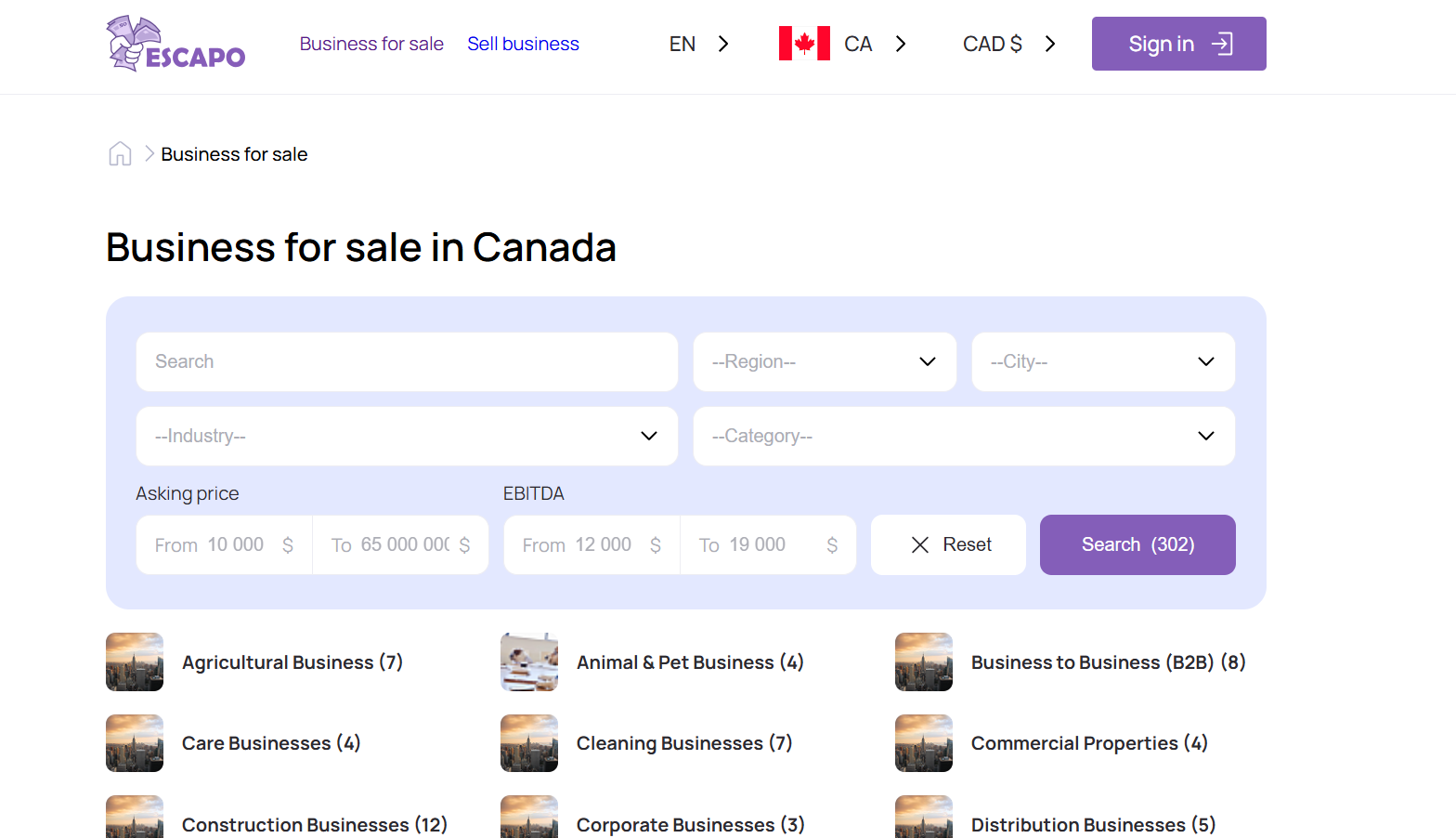
Buying a business in Canada can change your financial future because it gives you access to income, equity, and long-term control at the same time. Instead of building from zero, you acquire a company with customers, revenue, and operating history already in place. When the business is chosen carefully, ownership can create cash flow now and increase personal wealth over time.
What you will learn in this article
- why buying a business in Canada can be a faster path to wealth than starting one
- how an existing business can create both income and long-term equity
- what financial advantages come with business ownership
- which mistakes first-time buyers often make
- how to evaluate whether a business is a good investment
- what makes some businesses far more wealth-building than others
Why business ownership can change your financial future
Owning a business changes the way money works in your life. As an employee, income usually depends on salary increases, promotions, or bonuses. As a business owner, income can come from the performance of an asset that you control. That difference matters because an asset can grow in value while also generating cash flow.
This is one of the main reasons many people start exploring opportunities to buy business in Canada rather than relying only on traditional employment. When looking at a business for sale in Canada, buyers are not simply purchasing a job. They are acquiring a system that already produces revenue and may continue generating income for years. If managed well, that business can also increase in value over time, creating equity in addition to monthly earnings.
For many buyers, this is the real financial shift. You stop relying only on earned income and begin owning something that can compound in value.
Why buying an existing business is often stronger than starting from zero
Starting a business from scratch can work, but it usually involves the most uncertain and expensive phase of entrepreneurship. A founder must develop a product or service, test pricing, attract the first customers, and build operational systems from the ground up. During this early stage, revenue is often unpredictable while expenses continue to accumulate. Marketing, branding, equipment, and staff recruitment can require significant investment before the business generates stable income.
Another challenge of starting from zero is that the market response is unknown. A concept may sound promising on paper but fail to attract enough customers in practice. Many startups spend months or even years experimenting with pricing, positioning, and customer acquisition before reaching profitability. This trial-and-error period can consume both time and capital, which is why many new businesses close before becoming financially stable.
Buying an existing business for sale in Canada changes the starting point entirely. Instead of building everything from the beginning, the buyer takes over a company that already operates in the market. The business typically has an established customer base, supplier relationships, operational routines, and financial records that reflect past performance. These elements provide real data that can be analyzed before making an investment decision.
Financial visibility is one of the biggest advantages of this approach. A buyer can review revenue trends, profit margins, and seasonal patterns over several years. This information makes it easier to understand how the business actually generates income and whether that income is stable. Rather than relying on projections or assumptions, the buyer evaluates real performance.
Another benefit is the speed of transition to cash flow. Because the business already generates revenue, the new owner can begin receiving income much sooner than a startup founder typically would. Instead of spending years building a customer base, the buyer focuses on maintaining and gradually improving an existing operation. This can shorten the path to profitability and allow the owner to reinvest earnings more quickly.
For many entrepreneurs, buying an established company is therefore a more structured entry into business ownership. The risk does not disappear, but it becomes easier to measure and manage because the business has already proven that customers are willing to pay for its products or services.
The two financial engines: cash flow and equity
A business can improve your financial future through two powerful financial mechanisms: ongoing cash flow and long-term equity growth. Together, these two elements make business ownership fundamentally different from many traditional income sources.
Cash flow is the profit that remains after the business pays its operating expenses. These expenses usually include wages, rent, utilities, inventory, marketing, and other costs required to keep the company running. When a business consistently generates positive cash flow, that money can be used in several ways. The owner may take income from the business, reinvest in expansion, repay acquisition financing, or build reserves for future investments.
This is why many buyers focus on profitable businesses for sale in Canada rather than companies that only show strong sales numbers. Revenue alone does not guarantee financial success. What truly matters is the portion of that revenue that remains after all costs are paid. A smaller business with healthy margins may produce more useful income than a larger company with high operating costs.
Equity growth represents the second financial engine. When a business becomes stronger, more profitable, and more stable, its overall market value usually increases. Buyers often value businesses based on their profit, meaning that higher and more predictable earnings can significantly raise the company’s worth.
Equity can grow through several improvements. Increasing revenue, optimizing costs, strengthening customer retention, and reducing dependence on the founder all make a business more attractive to future buyers. As these improvements accumulate, the business may become worth significantly more than the original purchase price.
In practical terms, this means the owner benefits twice. First, the business generates income while it operates. Second, the value of the business itself can increase over time. When the owner eventually sells the company, that increased value can translate into a substantial financial return.
Because of these two mechanisms, business ownership can act both as an income source and as a long-term investment. Cash flow supports the owner in the present, while equity growth builds wealth for the future.
How buying a business can create more control over money
One of the most important financial advantages of owning a business is control. In a traditional job, income is usually determined by a fixed salary, periodic raises, or performance bonuses decided by an employer. Even highly skilled professionals often face limits on how quickly their income can grow. Business ownership changes this dynamic because income becomes linked to the performance of an asset that the owner can actively influence.
When someone buys an existing business, the financial outcome is no longer tied only to hours worked. Instead, it depends on operational decisions such as pricing strategy, efficiency, staffing levels, marketing effectiveness, and customer retention. These factors directly affect revenue and profit. While business ownership does not guarantee financial success, it gives the owner multiple ways to improve performance and increase earnings over time.
For example, a small service business might already generate consistent revenue but operate with outdated pricing or inefficient scheduling. A new owner who studies the operations carefully may discover opportunities to adjust prices to reflect market conditions, reorganize staff schedules, or streamline daily processes. Even small improvements can significantly increase profit margins without changing the fundamental nature of the business.
These operational improvements also influence the long-term value of the company. A business that produces higher and more stable profit is usually valued more highly by future buyers. As a result, every improvement made by the owner can contribute not only to higher monthly income but also to the overall financial value of the business.
This is one of the main reasons experienced investors often look for established businesses rather than speculative startup ideas. The opportunity is not only in what the company currently produces but also in what a disciplined owner can improve over time. By gradually strengthening operations, controlling costs, and improving revenue, the owner gains increasing control over both income and asset value.
What kinds of businesses can build wealth more effectively
Not all businesses create the same financial opportunities. Some companies generate impressive revenue but operate with narrow margins that leave little profit for the owner. Others rely heavily on the personal relationships or daily involvement of the founder, which can make them difficult to transfer or scale. For buyers who want to improve their financial future, the most attractive businesses are usually those with stable demand and clear operational structures.
Businesses that build long-term wealth often share several characteristics. They typically serve customers who return regularly or require services on an ongoing basis. This recurring demand creates more predictable revenue, which makes it easier for the owner to manage cash flow and plan investments. Businesses with understandable operations are also easier to manage because the owner can quickly identify inefficiencies and implement improvements.
Another important factor is verifiable profitability. A business that clearly demonstrates its margins through financial records gives the buyer confidence that profits are real and sustainable. When the business does not depend entirely on the personal relationships or specialized skills of the founder, it becomes easier for a new owner to take over and maintain performance.
Many wealth-building businesses also offer room for operational improvement. They may have outdated systems, limited marketing, or inefficient processes that a new owner can gradually optimize. These improvements can increase both profit and long-term business value.
In Canada, practical service businesses often fit this profile well. Companies providing cleaning services, maintenance, accounting support, IT services, home services, logistics support, or specialized local retail tend to combine steady demand with relatively straightforward operations. These businesses may not appear glamorous, but they often produce consistent income and can be improved through disciplined management.
In reality, many of the strongest wealth-building opportunities look ordinary from the outside. They do not rely on trends or rapid technological disruption. Instead, they provide useful services that people or businesses need regularly. What matters most is not how exciting the business appears but whether it produces repeatable profit and offers opportunities for improvement.
Buying a business vs other ways of building wealth
Business ownership is only one path to building wealth, but it works differently from more traditional approaches such as salary income, real estate investing, or stock market investing. Each of these options has advantages, but they offer different levels of control and financial potential.
A salaried job provides stability and predictable income, but growth is often gradual and determined by promotions or employer policies. Real estate can create wealth through property appreciation and rental income, but returns often depend on broader market cycles that the investor cannot directly influence. Stock market investments allow capital to grow over time, but investors have little control over the management decisions of the companies they invest in.
Owning a business combines elements of income generation and asset growth while also giving the owner direct influence over performance. The owner can actively improve pricing, reduce costs, enhance customer experience, and expand services. These decisions can increase profitability and, over time, increase the overall value of the company.
This combination of income and control is what makes business ownership unique. A healthy business can generate cash flow in the present while also becoming a more valuable asset in the future. If the company continues to improve, the owner may eventually sell it at a higher valuation than the original purchase price.
Of course, business ownership also carries responsibility and risk. Success depends on making informed decisions, managing operations effectively, and adapting to changing market conditions. However, for individuals willing to take on these responsibilities, buying a well-chosen business can offer a powerful way to influence their financial future and build long-term wealth.
FAQ
Is buying a business in Canada a good investment?
It can be, especially if the business has stable profit, reliable demand, and clear operating systems. The investment quality depends on the price paid and the strength of the business fundamentals.
Can buying a business make you wealthier than starting one?
Often yes, because buying an existing business can give you immediate revenue, customers, and financial history. That usually reduces the time needed to reach stable cash flow.
What type of business is best for long-term wealth?
Businesses with recurring demand, understandable operations, healthy margins, and low owner dependence usually provide the strongest long-term wealth potential.
How much money do you need to buy a business in Canada?
It varies widely by size, industry, and location. Some small businesses can be bought with modest capital and financing, while others require significant upfront investment.
What is the biggest financial risk when buying a business?
Overpaying for unstable profit is one of the biggest risks. If the profit is not repeatable after the transition, the buyer may struggle to recover the investment.










Leave a Reply