





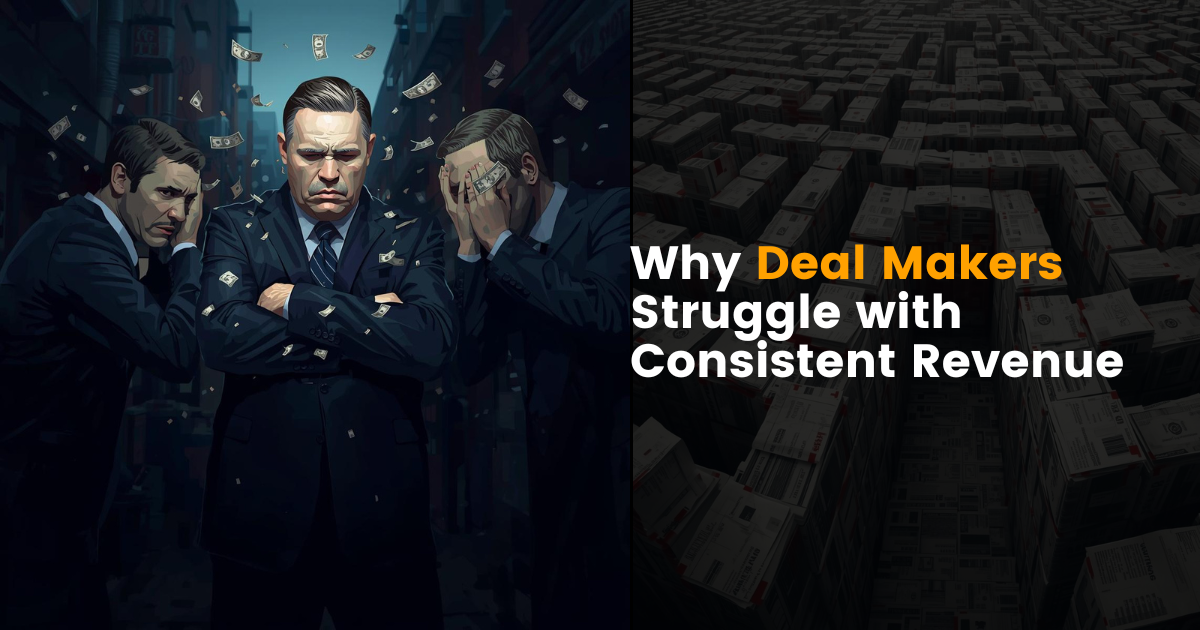
Deal Makers are the entrepreneurs who spot opportunities others miss, execute transactions with perfect timing, and generate explosive revenue when market conditions align.
They're also the entrepreneurs who experience feast-or-famine cash flow, struggle to predict monthly revenue, and watch their bank accounts swing wildly between abundant and concerning.
The same natural abilities that create Deal Makers' extraordinary upside also create their structural revenue problem, and understanding this is about building business models that work with timing-based value creation rather than against it.
Why Deal Makers Can't Do Consistent Revenue
Deal Makers create value through transactions that depend on timing, opportunity recognition, and market conditions aligning favorably. When these factors converge, they execute deals that generate months of revenue in days, but when conditions don't align, forcing activity produces low-quality transactions that waste energy without creating proportional value.
This creates revenue patterns where Deal Makers might close three major deals in one quarter generating $300,000, then go two quarters with minimal revenue while waiting for the next opportunity worth pursuing. The annual revenue looks strong, but monthly cash flow creates operational stress and makes traditional business planning nearly impossible.
Advisors tell Deal Makers to “create recurring revenue” and “build predictable systems,” not understanding that these suggestions contradict how Deal Makers naturally create value. Asking a Deal Maker to generate consistent monthly revenue is like asking a surfer to create consistent waves; the skill is reading conditions and executing when opportunity appears, not manufacturing opportunities through effort.
The Subscription Model Trap
The business world worships subscription revenue and recurring models, promoting them as superior to transaction-based businesses regardless of who's building them. For Deal Makers, forcing subscription models creates the appearance of stability while destroying the very advantages that make them valuable.
Deal Makers struggle with subscription businesses because the model requires consistent delivery of the same value proposition month after month, which means doing the same thing repeatedly regardless of market conditions. This eliminates the opportunity sensing and timing leverage that Deal Makers depend on, replacing dynamic responsiveness with systematic repetition.
When Deal Makers build subscription businesses, they either delegate the operational consistency to others while they focus on deals (which works), or they try to run the subscription business themselves and experience grinding dissatisfaction despite “successful” revenue metrics (which doesn't work).
The Revenue Model That Actually Works
Deal Makers don't need to fix their inconsistent revenue. They need business structures that accommodate timing-based value creation while managing the operational challenges it creates.
Transaction-based services with retainer foundations. Structure deals as high-value transactions while maintaining modest retainers or advisory fees that cover baseline expenses. This allows Deal Makers to pursue meaningful opportunities without cash flow panic between deals.
Commission and performance-based models. Align revenue with successful outcomes rather than time invested, allowing Deal Makers to focus energy on transactions worth executing rather than maintaining activity for appearance sake.
Portfolio approaches with multiple deal pipelines. Instead of one business generating consistent revenue, build multiple deal sources across different markets or opportunities, increasing the probability that something closes each quarter even as individual deals remain unpredictable.
Partnership with complementary profiles. Deal Makers partnered with Mechanics or Accumulators create powerful combinations where the Deal Maker sources opportunities and closes transactions while the partner manages systematic delivery and operational consistency.
The Competitive Advantage
Deal Makers who accept timing-based revenue as a feature rather than a bug gain competitive advantages others can't replicate. They can wait for perfect opportunities while competitors with monthly overhead pressure accept mediocre deals. They can execute boldly when conditions align while others hesitate. They capture value from market timing that systematic businesses miss entirely.
The entrepreneurs who build the largest fortunes in transaction-based industries are almost always Deal Makers who learned to manage cash flow volatility rather than eliminating the timing-based approach that creates their edge.
Take the Wealth Dynamics test to discover your natural revenue model. Understanding whether you're a Deal Maker or another profile determines which business structures create sustainable success versus constant struggle against your natural value creation pattern.








Leave a Reply