





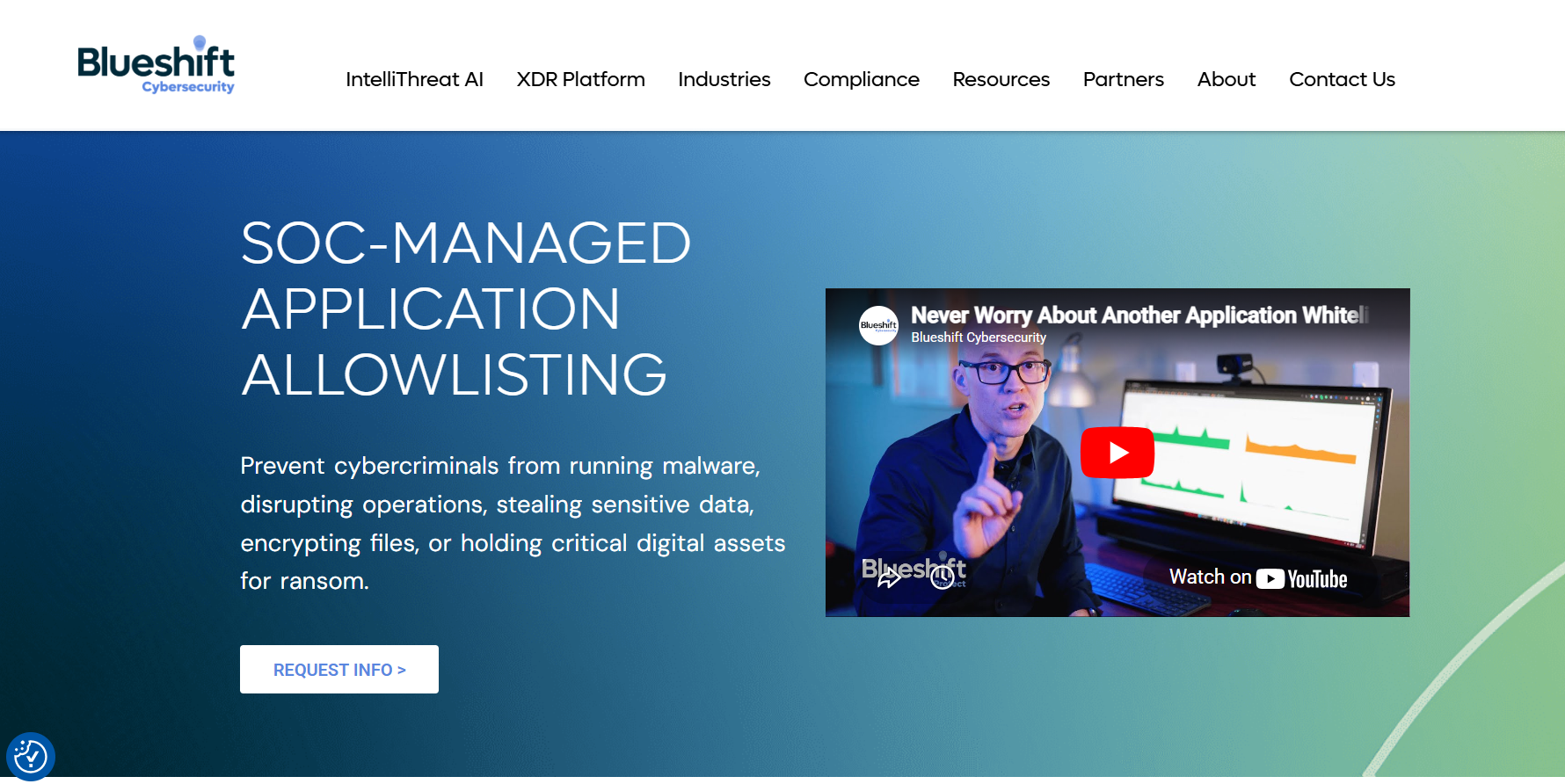
The digital world has never been more dangerous. Cyberattacks are growing in frequency, sophistication, and financial impact — and no organization, regardless of size or sector, is immune. In this environment, managed cybersecurity solutions have emerged as the most practical and effective way for businesses to maintain strong, continuous protection without the burden of building an entire security operation from scratch. Companies like Blueshift Cyber are at the forefront of this shift, delivering AI-powered security services — including Managed Extended Detection and Response (XDR) supported by a 24/7 U.S.-based Security Operations Center (SOC) — that give small-to-medium-sized businesses, government agencies, and critical infrastructure operators the tools they need to detect threats early, respond quickly, and maintain resilient defenses against constantly evolving cyber risks.
What Are Managed Cybersecurity Solutions?
Managed cybersecurity solutions are services provided by specialized third-party firms that take responsibility for monitoring, detecting, and responding to cyber threats on behalf of an organization. Instead of hiring a full in-house security team — analysts, engineers, incident responders, and compliance experts — businesses partner with a managed security provider to handle those functions continuously and professionally.
This model has become increasingly popular because the cybersecurity talent gap is real and widening. There are millions of unfilled security positions globally, and smaller organizations simply cannot compete with large corporations when it comes to attracting and retaining skilled security professionals. Managed solutions bridge that gap by giving any organization access to enterprise-grade expertise at a fraction of the cost.
The Core Services That Make It Work
Managed Extended Detection and Response (XDR)
Traditional security tools often operate in silos — one tool watching the network, another monitoring endpoints, another scanning emails. Extended Detection and Response breaks down those silos by integrating telemetry from across the entire environment: endpoints, cloud workloads, network traffic, user activity, and more. The result is a unified, correlated view of potential threats that individual point solutions would miss entirely.
When managed by a provider like Blueshift Cyber, XDR becomes even more powerful. Their AI-driven platform continuously analyzes activity across all vectors, while a team of expert SOC analysts reviews alerts around the clock, validates genuine threats, and takes immediate action — whether that means isolating a compromised device, blocking malicious traffic, or notifying the client with full context. The combination of machine speed and human judgment is what separates modern managed XDR from older, reactive security approaches.
Managed SIEM and SOAR
Security Information and Event Management (SIEM) platforms collect and correlate log data from every part of an organization's environment — firewalls, servers, cloud services, authentication systems, applications — and surface meaningful alerts from what would otherwise be an overwhelming flood of raw data. Security Orchestration, Automation and Response (SOAR) then automates the workflows that follow, accelerating response times and reducing the risk of human error.
Running SIEM and SOAR in-house is technically demanding and expensive. The platforms require constant tuning, ongoing rule development, and skilled analysts who know how to act on what the systems surface. A managed SIEM service removes that burden entirely. The provider handles configuration, maintenance, and analysis — giving the organization enterprise-level log management, intelligent alerting, and automated response without the need for a dedicated internal team to run it.
Zero Trust and Application Control
Zero Trust is now a foundational principle of modern cybersecurity. Its core premise is simple: no user, device, or application should be trusted by default, even within the corporate network. Every access request must be verified, and every system should operate on the principle of least privilege.
A practical and highly effective implementation of Zero Trust is application control. By defining exactly which applications are allowed to run on any given system — and blocking everything else — organizations can eliminate an enormous category of threats. Ransomware, for example, typically relies on being able to execute unauthorized code. Application blacklisting tools complement this approach by explicitly blocking known malicious or unwanted software, creating a layered defense that significantly shrinks the attack surface available to adversaries.
Continuous Monitoring and Threat Intelligence
Sophisticated attackers don't announce themselves. They move slowly, conduct quiet reconnaissance, and exploit small gaps over time. Detecting these patient, stealthy intrusions requires continuous monitoring — not periodic scans or manual log reviews, but real-time analysis of behavior across the entire environment.
Threat intelligence adds critical context to that monitoring. Knowing which threat groups are currently active, what tactics they are using, which vulnerabilities they are exploiting, and which industries they are targeting allows security teams to stay ahead rather than simply react. Managed providers integrate live threat intelligence feeds into their detection logic, ensuring that defenses adapt as the threat landscape shifts.
Who Benefits Most?
While virtually every organization can benefit from managed cybersecurity, certain sectors have the most pressing need.
Small-to-medium-sized businesses are disproportionately targeted by cybercriminals who assume — often correctly — that their defenses are weaker. A single successful ransomware attack or data breach can be financially and reputationally devastating for an SMB. Managed security gives these organizations the same caliber of protection that large enterprises enjoy, without requiring the same scale of investment.
Government agencies face a unique combination of sensitive data, complex compliance requirements such as CMMC and FISMA, and the reality that nation-state actors treat government networks as high-value targets. A managed partner with government experience understands both the technical demands and the regulatory landscape these agencies must navigate.
Critical infrastructure operators — utilities, healthcare systems, water treatment facilities, transportation networks — operate in environments where a cyberattack can have immediate consequences for public safety. As the line between IT and operational technology (OT) continues to blur, the attack surface expands, making specialized managed security not just valuable but essential.
The Real Cost of Going Unprotected
The financial case for managed cybersecurity is straightforward. The average cost of a data breach now runs into the millions — and that figure doesn't fully capture the downstream costs of regulatory fines, legal liability, lost customers, and reputational damage. For smaller organizations, these consequences can be existential.
Against that backdrop, the predictable, subscription-based cost of a managed security service is not just an expense — it is a risk management strategy. Organizations also free their internal IT teams from constant firefighting, allowing them to focus on technology initiatives that drive growth rather than spending their time responding to security incidents they are not fully equipped to handle.
What to Look for in a Managed Security Partner
Not all managed security providers are created equal. When evaluating a partner, organizations should look for genuine 24/7 coverage staffed by human analysts — not just automated tools running overnight. They should look for integrated capabilities that span detection, response, log management, application control, and compliance support, rather than a narrow point solution wrapped in a managed services label.
Sector-specific experience matters too. A provider that understands the regulatory environment and threat profile of your industry will be far more effective than a generalist. Transparency is equally important — organizations should always have clear visibility into their security posture, what was detected, how it was handled, and where risks remain.
Conclusion
Cybersecurity is no longer an IT problem. It is a business risk, a regulatory requirement, and in many sectors, a matter of public trust and safety. The organizations that navigate this environment successfully will be those that close the gap between their exposure and their defensive capability — and managed cybersecurity solutions are the most practical path to doing exactly that.
Providers like Blueshift Cyber represent what effective managed security looks like today: AI-powered, analyst-backed, continuously vigilant, and purpose-built for the organizations that need strong protection the most. In a threat landscape that never sleeps, the right managed security partner ensures your defenses never do either.








Leave a Reply